Math art on the graphing calculator. Equations as a drawing surface.

Desmos is the closest thing I have to doodling. The graphing calculator turns out to be an expressive drawing tool: implicit regions, animated sliders, and a list comprehension language that lets you draw with math directly instead of pixels.
Most of what I make ends up as small portraits, geometric patterns, animated illustrations, or tiny self-contained toys. Nothing serious, just a satisfying way to spend an evening. Below are a few in roughly the order I made them.
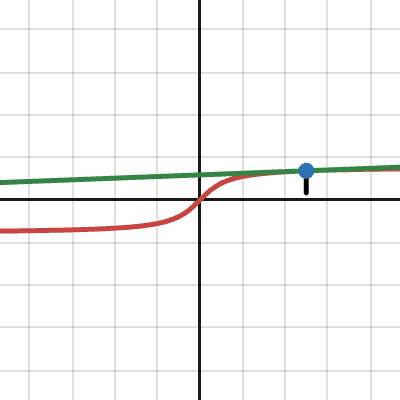
Newton-Raphson oscillation finder
A small numerical experiment. Newton-Raphson on arctan diverges past a threshold initial guess, and exactly at that threshold it lands in a 2-cycle that bounces forever. This graph uses a binary-search-style approach to home in on that exact oscillation point.
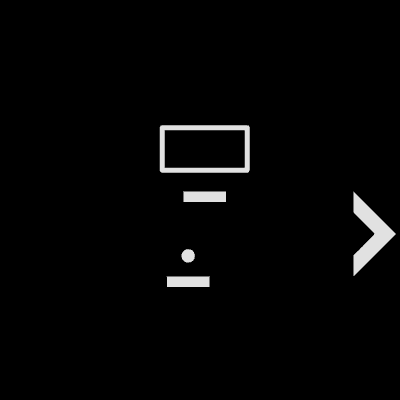
Incomplete arcade
An arcade-style multi-game graph on a single Desmos calculator: a menu, a few games, and shared state across all of them. Still unfinished, but the framework for switching between games is there.
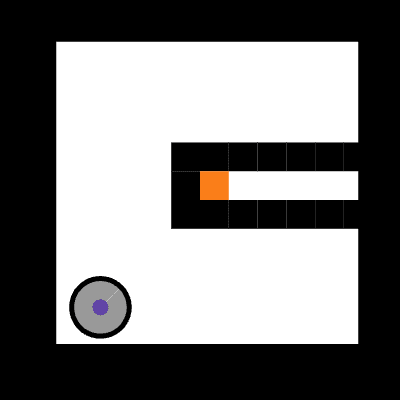
Square game
A tiny game that runs entirely on Desmos sliders and conditional regions. You drive a small square around the graph and play with what the calculator can do once you stop using it as a calculator.
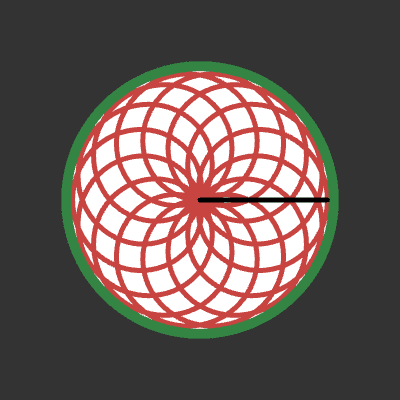
Petal field
A small art piece: a ring of overlapping circles that, taken together, draw a multi-petal rose. One of those quiet mathematical patterns where you're not sure why it's pretty, only that it is.
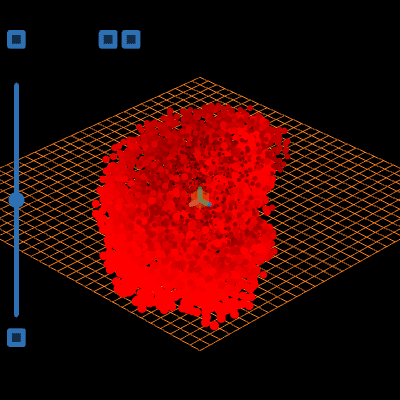
3D point cloud viewer
A small projection engine for 3D point clouds, written entirely in Desmos formulas. Drag on the graph to spin the camera and watch the cloud reproject in real time. Built while learning the math behind 3D-to-2D projection.
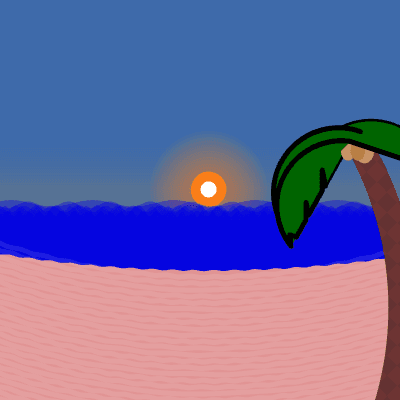
Sunset
An older project I submitted to a Desmos art contest. Drag the sun to actually watch the sunset happen: the colors of the sky, the moon position, and the wave height all key off its position.